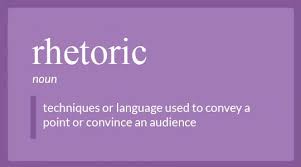
Rhetoric and Composition
Janice M. Lauer looks into rhetoric and composition as ideal types of writing that could influence writers in developing content for the workplace, civic and cross-cultural. A learner experiences different levels of English studies from language arts curricula in primary and middle grades to advanced composition at the college level. Few students major in English studies due to its perception of being a basic subject, but Lauer points out that it goes beyond learning literature to developing an ideal discipline for rhetoric and composition. The reading focuses on rhetoric and composition writing, whereby Lauer looks at their relationship and disciplinary status. When one has a broad perspective on rhetoric and composition, it becomes easier for them to decipher past rhetorical texts such as Aristotle’s Rhetoric, Quintilian’s Institutio Oratoria and Cicero’s De Oratore. Ideally, Lauer takes the reader through the importance of rhetoric and composition as an ideal type of writing for skilled writers.
From the reading, one has a broad perspective of rhetoric and composition with its influence of written English. One learns and understands the value of ideal types of writing especially towards the composition of texts. Moreover, the skill proves to be ideal for people that seek to analyze the writing process. As per Lauer’s depiction of rhetoric and composition, English stands out as an art that one could major in and develop a keen eye on writing processes. Lauer highlights the need to nature and emphasize different writing pedagogies for it to evolve with time (112). The process fluctuates, rises and declines with different scholars, who seek to recycle principles developed for writing pedagogies. Contributions to its advancement saw rhetoric and composition develop scholars’ approach to critique previous work and challenge underlying arguments and claims. Therefore, the need to restore rhetoric and composition in literature remains a fundamental part of its evolution and influence on written English.
The reading opened my perspective on the discipline with the main focus being rhetoric and composition. Understanding the vital structures of English seem ideal in developing one’s literature and poses a major boost in one’s eloquence in written English. As an intermediate learner, the skills discovered from the work allows one to branch out further by integrating ideal types of writing, which will enrich one’s content. Furthermore, it offers one the chance to explore the subject by understanding previous examples of rhetoric and composition principles and how one can integrate it into their studies. Building upon the current skills in literature, one can explore different features of writing to enrich one’s content. One question that arises is how can scholars package the information as per different academic levels to help young people to develop the skills throughout their academic lives. It makes the teaching process easier as students will be conversant with the subject.

The Problem of Othering
Stephen Menendian and John A. Powell look into the overwhelming challenges and conflict across the globe as a result of othering. Othering refers to the practice where a person or group characterize negative sentiments on another person or group and set them apart as a representation of what is different from them. Racism is a good example of othering, whereby one’s complexion or race affects their status in society. Menendian and Powell explore effects of othering in the society by providing examples such as the ethnic conflict between Muslim and Burmese Buddhist in 2012 (par 7). The authors identify othering as a trait passed on from one generation to another with little or no basis of conflict. It stems from personal rage or sentiments on another’s race or religion and the need to be even or better than the other. In the article, Menendian and Powell focus on group-based othering as it represents various vices that affect a large group or society.
The article’s main focus on group-based othering allows the reader to explore different perceptions of society’s norms. Menendian and Powell give an example of American politics, whereby President Donald Trump used resentment, stoking anxiety and fear of the other as his electoral strategy. The group-based othering encompassed Trump’s racist and nativist nature for the better good of the nation (Powell and Menendian par 14). The article terms the practice as demagoguery and it can be a catalyst for future conflict within the society or nation. The authors believe demagoguery stems from unconscious bias, where one inclines to ideas that please them without considering its negative effects. Ideally, how one perceives a particular race or religion will always affect their judgement on them. Based on the analogy, despised outgroups refer to social groups with low competence and warm in society. Social groups with high competence and low warmth are envied outgroup and remain dominant over the other outgroups.
The article opens one’s mind to the effect of othering in society and how people fail to understand society’s norms or privileges. As a learner, understanding the vices of group-based othering allows one to align themselves with the norm. However, there is room for one to provide their sentiments through freedom of speech, which allows one to be independent. The article details the vices associated with othering and how American society continues to stand behind their common practices. Change in the society and government will require intervention from various bodies that will uproot the evil vices and set the stage for a better future. One thing that stands out from the article is the need for one to understand their surroundings and focus on issues that affect people in different capacities.
Works Cited
Lauer, Janice M. “Rhetoric and Composition.” McComiskey, Bruce. English Studies: An Introduction to The Discipline(s). Urbana: National Council of Teachers of English, 2006. 106-152.
Powell, John A and Stephen Menendian. The Problem of Othering: Towards Inclusiveness and Belonging. July 2016. Accessed on 26 September 2020, <www.otheringandbelonging.org/the-problem-of-othering>.
 Writing Studies Journey