Be yourself; Everyone else is already taken.
— Oscar Wilde.
This is the first post on my new blog. I’m just getting this new blog going, so stay tuned for more. Subscribe below to get notified when I post new updates.
Be yourself; Everyone else is already taken.
— Oscar Wilde.
This is the first post on my new blog. I’m just getting this new blog going, so stay tuned for more. Subscribe below to get notified when I post new updates.
As many of us can agree, I usually cringe at the thought of group projects. It is hard for me to let others have a part of what I produce. Especially when there is a grade that can impact my overall grade for the class. However, with this cohort or professionals, I feel like we can do this and not have to worry about others. Giving up control is hard to do, but I know that teamwork can produce better results than individual work when there are so many great minds working together.
My biggest concern however, is our time constraint. We all have wonderful ideas and can contribute to each others ideas. Some of the ideas were not achievable in such a short period of time. We have learned so much from each other over the course of the semester. There was a lot of information that all of us could use as a reference in our current or future careers. So I am going to remain open minded with our final decision on what we should do. The biggest thing for me, as a learning objective, is more personal than educational.
I want to learn how to let go of control. I need to know that it is okay to rely on others for help and assistance. At the same time, my peers need to know that they can rely on me for my input to the project as well. As Dionne Warwick described, “A chair is still a chair, even when no one is sitting in it.” No matter how we look at this collaborative work, we will all be able to look back on this class and say, we produced something great. Lets make this ‘chair’, one we can always sit in when we need to. It is okay to have things hold us up, and support us when we grow weary and tired.
I like Ella Fitzgeralds’ rendition better and included it below.
As my weekend comes to an end, I want to take a few moments and acknowledge a few things that I’m most grateful for this year, but first, a few thoughts and observations.
Often we take many things in life for granted. If we stop what we are doing, and just look around us, we will see so many materialistic things. What do these ‘things’ do for us? The very computer that I’m sitting here and typing on, has been a tool that has made this year more manageable. Like many of us, we have come to rely on our computers to make our every day life operable. From sitting in Zoom meetings for classes, work and even gatherings with friends, it has allowed us to maintain a sense of connection. We may be burned out from it, but we also must be grateful to have these tools available to us.
Another thing that comes to sight is the walls surrounding me. The luxury have having a roof over my head, the heat running to keep me warm, the lights are on and the electricity is flowing through my house. I know it sounds cliché, but I often overlook the fact that I do have these things available to me and there are so many people out there struggling and wishing that they had a small portion of these luxuries.
Many of you have seen a side of me that I don’t like. I know that it is a problem and I’m working on bettering myself. The family that the Kean University Writing Program has been a blessing in disguise. There are so many of you that are supportive of one another and makes the struggles, that much easier to deal with. It is an honor to be a part of this program and make so many new friends. I will not name names, but there are several of you that have personally reached out to me and even though I’ve stated it before, I’m extremely grateful for each of you.
So to wrap this post up, I want to list a few other things that I’m grateful for this year. In addition to the things I have already mentioned, let me add the fact that I am here, another day vertical and breathing. Even though my health is not the best it has been, I know that it could be a lot worse. I’m grateful that my father has been cleared and is now negative from COVID-19. Many of us, including myself, have lost loved ones to this disease, and it has made it hard for us to live our daily lives without them, but know that life continues on. We must cherish our memories that we have of them and live life to its fullest. Share their memory with others, you will know when the time is right. Trust me. This year has been tough on us all, emotionally, mentally and physically. I’ve been blessed with another year from both of my fur-babies, and they keep me on my feet.
Thank you to all that have read this far in my ranting for the week. Hopefully, you too have took the time to look around you and observe things that you use daily that others don’t have the opportunity to. Let’s make a pact. If you do not currently write a daily or weekly journal, I encourage you to do so. It has helped me in so many ways, but in that journal, let’s write one thing, each entry, that we have to be thankful for. I bet it will change our perspective in more ways than one.
In the article, Culture of Power, Lisa Delpit demonstrates that she accepts that the discussion between utilizing abilities and utilizing a cycle approach is essentially an error. She utilized the discussion over cycle arranged versus abilities situated discounting guidance as the beginning staging to look at the “way of life of intensity” that exists in the public arena as a rule and in the instructive climate specifically. She accepts that the genuine issue is the scholastic who request that classifications be partitioned not with the end goal of improved educating, but rather for the creation of a simpler investigation. The genuinely gifted instructor will utilize both the cycle arranged, and aptitudes situated methodology which thus manages students to build up their own freedom and let their feelings be respected in the public eye. She likewise infers that the significant issue is figuring out how to impart across various societies that prompt the problem regarding whose voices are heard in our public. She ultimately comes to the end result that instructors must show all understudies the express and certain principles of intensity as an initial move toward an all the more society, or, in all likelihood nothing will be picked up in the instructive framework if individuals keep on closing out individuals who have various convictions and translations from their own. She feels that a feeling of comprehension and adaptability will profit everybody and give a more adjusted voice to ALL individuals in the public eye paying little mind to any racial variables.
I can totally observe the very models that Delpit gives all through the article of individuals’ differentiating perspectives continually being overlooked and disregarded. Individuals may act like they are tuning in, yet, they are stubborn and are not generally open to changing their idea designs. On another point, I concur with Delpit when she recommends that one must utilize both the cycle and abilities way of instructing, and not center exclusively on one specific strategy. Frequently Black educators who center on aptitudes are misconstrued by their white understudies, and tight clamp versa. Though, White instructors that are more centered on the cycle technique are more misjudged by Black understudies. In two circumstances, the instructors, and understudies are presumably attempting to pass on similar data. However the techniques in which they go about it are separating. The last is the thing that prompts disappointment and twists among educators and understudies. She additionally gave the idea of having Black English in our public, where I can concur with certain parts of this idea. The article asserts that it is conceivable to learn both ‘High contrast English.’ There should be an acknowledgment that there is definitely not a specific right approach to talk, the explanation that White English is more dominating and viewed as the standard is because that White individuals have been the larger part and esteemed it to be standard. I believe that we as a whole need to perceive that there are a few varieties of the right method to talk. She looks at numerous social concerns, which particularly centers on the manner by which thoughts are conveyed and instructed in the public eye in the general public.
Works Cited
Delpit, Lisa D. “The Silenced Dialogue.” Exploring Education, 2017, pp. 297–310.
The Erasure of Sentence
This article contains the contemporary composition of good sentence structure that provides antique formalism and behaviorism to better essays and studies. These ideas are to enhance an intellectual way of composition teaching with the approved interest of scientific and mechanism that creates attention in the desired element of the order of competition (Connors 96). I like the paragraph theory content of this article relating to my history of writing and providing syntactic sentence structure methods. I could use this extraordinary way of structuring my sentence on a brief overview of intense pedagogies to mention different mainstream composition studies and relate to historical content. A unique way of African composition of rhetorical sentences provides a realistic way of structuring out ideas that are very useful in composition writing.
Rhetorical questions provide a clear overview of the ideas and ways of expressing an individual’s views toward a particular essay writing topic. On the other hand, Christensen’s rhetoric is useful in teaching writing good sentences using the essential articles and sentence structure that portrays learners’ ideas in the best way (Connors 97). I will use these ideas in pedagogical methods to avoid writing long sentences and write meaningful sentences that will better express my thoughts using rhetoric sentences. Christensen’s rhetoric entails a traditional way of capturing intervention and ideas using reliable language skills. It provides a good write-up and good sentence structure that can be applied in all my writing. Besides, imitation will help me write parts of my essay and use the desired instruction to structure the best paper to attract better grades and improve my writing skills.
This book is exciting in guiding students to structuring sentences using rhetorical questions and essential techniques that make an essay appealing to the reader. Besides, sentence combining juggernaut helps construct my essays by combining two or more short, simple sentences to make up a longer sentence and uniquely portray my idea. Furthermore, relying on this approach, I will have to structure one of the best essays in the course, which will help me attain better grades at the end of the course (Connors 103). I would have to ensure I have relied on grammatical theories using syntactic structures and theoretical-based establishment of the sentence to combine pedagogies and develop a fantastic sentence structure that will uniquely portray my ideas, thus attracting better grades.
Grammar and Teaching of Grammar
I like this article’s content on how to make an attractive and robust conclusion. The way this article has put three ideas on how to write an effective conclusion. The content on how to avoid grammatical errors and to remain controversial to your stated ideas. The article entails experimental studies that are beneficial for informal grammar, instruction, and significant lessons on the quality of writing a persuasive essay and avoiding errors (Hartwell 105). I’m glad to learn about Scott’s rendering effects as a way of providing an exciting conclusion with no mistakes and providing a careful definition of words of grammar in defining ideas and following instructions. I like how this article is essential in providing the desired ideas on research by examining a particular population or an aspect related to my research articles and essays that I need for my course.
It is clear that the controversy of grammar instruction’s value determines the final grade in his writing (Hartwell 109). Relating the information in this article is what I need to attain the best grades in essay writing at the end of the course. They sing on the consequence of making grammar issues essential to write a persuasive essay that attracts the instructor and results in better grades.
Besides, using the rule to speak out the language and the following grammar is essential in providing unconscious knowledge to our continuative way of nature. The writing rules and guidelines provide approximate and profound grammatical-error-free, which is good and attracts one to continue reading your essay. It is evident that learning grammar one linguistic will tend to agree with a surprising little way about implicit scenes and reporting of rule forming ideas in speech and the prominent role of forming plurals that are memorable in noun separation (Hartwell112). Demonstrating this idea will produce a controllable overview of rule creating and spoken plural rule of the word. As a result, the screw rule tends to explain collective nouns and form a mass of nouns towards the abstract entities of sound features in noun ending sound.
Works Cited
Connors, Robert J. “The Erasure of the Sentence.” College Composition and Communication, vol. 52, no. 1, Sept. 2000, p. 96
Hartwell, Patrick. “Grammar, Grammars, and the Teaching of Grammar.” College English, vol. 47, no. 2, Feb. 1985, p. 105
This week, I have took some time to work on a little more revision in one of the pieces I intend on using in my thesis. Some of you have seen it, but for those that have not, It has been included in this post. Please let me know what you think.
We were in the city of brotherly love, Philadelphia. It had been a long and hot summer. The ships company was exhausted from busting our asses to get our vessel seaworthy. Every department had their own task while we were in dry dock. I was a part of the deck department. We had a motto of “work hard and play harder.” For many of us, we held to that motto. The deck department was responsible for overhauling the surface of the ship, her anchor and the refueling stations. The engineering department played a vital role and was charged with overhauling the ships propulsion system, including the engines.
Our days would begin at 0600 and we would often work till sunset. For those of us in the deck department, we were working topside in the direct sun. The sound of needle guns being used to strip the paint and nonskid off the deck could be heard all around us. Disk sanders grinding the rust from the bare metal was also a very common sound. If you were like me, and were fortunate enough to have earned some rank, then you had your own crew of deck personnel. That meant I didn’t have to get my hands as dirty, but don’t think that I chose to sit back like many others Petty Officers and watch my junior enlisted. No, I had no problem jumping right in there to help them, but I had to manage three different groups of eight junior sailors. So, I really couldn’t stay in one spot for too long. If left unattended, they had a habit of slacking off.
***
It was early September when the crew received an announcement from our commanding officer, Captain Reed. She had the officer of the deck assemble ships company in the hanger. It was there that approximately all five hundred and eighty personnel found out that our command was over budget in the yards and we had to stop with any plans for new projects. We were ordered to finish all current improvements within the next two weeks. We had to be out of the shipyards by the end of the month. The news came as a shock to most of us. As she finished her announcement, she opened the floor for questions and boy did she regret doing that.
Without skipping a beat, everyone heard the deep and raspy voice that was known to be of one person. One of the saltiest sailors to be a part of our crew. It was the kind of voice that commanded respect and silence when speaking. The voice was that of our Chief Engineer.
“It is going to be impossible for my men and I to complete the overhaul of the starboard engine. Parts are on back order and the old parts are not salvageable. It is going to be at least sixty days before our parts arrive!”
Banter began to fill the room when he was done speaking. My shipmates from the engineering department knew that what was being asked of them by the commanding officer was impossible. I could overhear the conversations amongst them confirming what the Chief Engineer had just exclaimed.
Captain Reed hesitated in her response and when she finally replied, her comment was alarming.
“We have to do it! There are no other options at our disposal.”
As I looked around the room at my shipmates, I could see the hopelessness and anger in their faces. They knew that what was being asked of them was not going to end well.
***
Over the course of the next couple of weeks, all of the deck apes had their ‘hands-on deck’. Meaning everyone, regardless of rank or position, had a direct job of completing a task. Not just supervising the completion. Our days became longer and more strenuous. Our workdays turned into sixteen-hour shifts, seven days a week. The day before our scheduled departure, my crew of junior sailors and I completed the installation of the ships anchor. This may sound like nothing, but it was very labor intense.
Our anchor had one hundred and twenty shots of chain and a five-thousand-pound fluke anchor. Each shot of anchor chain was twelve feet in length and an individual shot weighed six hundred and fifty pounds. We had cranes assist us with the lifting of each shot, but we had to connect each shot with detachable links and maneuvering those into place took a lot of brute force. Lucky for me, one of my junior sailors was a gym rat. During his off hours, you could always find him working out. He was strong like an ox. It was no easy task, but my crew accomplished a task that normally would take three to four days of work.
***
At the end of our last day in the yards, our crew was beaten, and morale was at an all-time low. Being the sailor I am, I invited my crew out for one last night on the town in Philly. Of course, we had to hit up Tony Lukes for cheesesteaks, and then we went to South Street. South Street was our favorite area to hang out in during our off hours. For some, it was the variety of shops available through the area. For me, it was the variety of bars and food. During our time in the yards, I had become a regular at Fat Tuesdays. The endless wall of frozen concoctions satisfied my thirst, especially the 151 Octane. As my crew and I arrived that night, the staff of the bar knew we were leaving the next day. They threw us a bit of a going away party, but we knew it was really a gesture of gratitude for all our business throughout the past months. Afterall, our ships company would literally fill their bar on any given night we were there. There were even a few times that we drank the bar dry, causing them to close their doors early.
While my crew and I were getting lost in the night, one of my shipmates from the engineering department stepped up to the bar next to me and ordered a round. Being mechanically inclined, I had to inquire about the status of the engine overhaul.
“Hey gear head! How’s the engine overhaul coming along?”
I will never forget his tone of voice. It went from that of one having fun and not a concern in the world, to a deep saddened and fearful voice.
“Marlowe, it’s not good! We completed the reassembly, but it is far from being any better than when we pulled into the yards. It is actually worse now than before. We have valves are still inoperable. Gaskets that were removed had to be reused. Three of the gaskets are completely shot. Number six, eight and twelve cylinders have no compression because of the faulty valves. I do not want to be anywhere near the starboard engine when it is started.”
I don’t know why, but his message put me into a deep thought of what could possibly go wrong when the engine is started.
As the bartender announced last call, I was still sitting there in a state of concern. The bartender came over to me and asked if I was okay. It was clear to her that something was on my mind. I thanked her for checking on me and told her that I was just reminiscing on the memories that I will forever have because of that place. Afterall, I couldn’t disclose to her what was really bothering me. When I asked for my check, she said it was on the house and asked if I needed a ride back to the yards. Unfortunately for me, I could not stop thinking about what my shipmate had told me that night and I refused her offer and took a cab back.
***
“Reveille! Reveille! Reveille! All hands heave out and trice up. Reveille.”
The 0600 wake-up call marked the start of what I knew was going to be long day. It was a rough night and I didn’t get an ounce of sleep. I had way too much on my mind. Yet the day had finally come. We were leaving the shipyards six months ahead of schedule. All our hard work in the past few months surely meant that we were going to get some down time once we got to sea. I grabbed my uniform of the day, a pair of paint stained and oily coveralls. Getting the ship underway was often a dirty job. That’s why we never wore a clean uniform for getting underway. Mooring lines had to be heaved in by hand. That meant they were cast off the bollard of the pier and into the water. As you pulled the lines in, the water would soak you and your uniform.
It took us several hours to get pulled by the tugboats, out of the channels and into the open sea. By 1500 hours, the U.S.S. Detroit (AOE-4), was finally back at sea and on her own power. Captain Reed came onto the ships 1MC, our announcement system, and made an announcement.
“Good afternoon Tigers! I want to take a few moments and update everyone on our status. As you all know by now, we are sailing on our own power. Only our port side engine is running at this time, but I’m confident that by the end of this evening, we will have our starboard engine up and running. The Chief Engineer has given me his word that we will be on full power later tonight. I also want to thank the department heads from each division for their dedication over the past few weeks. It was their drive and determination that allowed our ship to leave the repair yards.”
She went on for a few more minutes, praising the officers for all their hard work, and she commended several senior enlisted members that played vital roles in ensuring task were done on time. The junior enlisted members knew that it was our work that made it possible, but the officers and senior ranking members always get the credit for the work being done. Captain Reed was so pleased that she ordered all departments to knock of ships work and have the rest of the day as a stand down time. Only the crew on duty had to be working. The rest of us could relax. Fortunately for me, my duty rotation didn’t begin until 2000 hours. That gave me a few hours to go shower and take a power nap.
***
When my time came to report for duty, my first station was on the bridge as the helmsman. As I took over the watch, one couldn’t help but overhear a bunch of chatter amongst the officers on the bridge. They were talking amongst themselves and I could tell that there was something wrong. It was just unclear to me what it was they were referring to, so I just focused on my duties and responsibilities of keeping the ship steered in the right path.
As my time on duty progressed, the officers chat and banter were becoming more and more alarming. By the time my duty was over at midnight, I knew that something was not right, but still had no clue as to what was wrong. All I kept thinking about was the conversation that I had with my shipmate at the bar from the previous night. Was the officers dismay over something happening in the engine room? Maybe they were not happy with the captain for her inability to manage the funding of our ship repairs in the yard. There was a lot that could be speculated, but I just didn’t know. So, I took a long hot shower and turned into my bunk for the night.
***
It wasn’t long after getting into my bunk, a loud explosion was heard through the silence of the night and the sleeping crew was immediately awakened as the explosion was also felt with force. Alarms were immediately going off across the ships 1MC. A message soon followed the alarms.
“Fire! Fire! Fire! Class bravo fire in the starboard engine room. All hands report to your battle stations!”
The crew, including myself went into panic mode. As I was running to my battle station, I had to pass by the entrance to the engine room where the explosion had just occurred. I could hear cries for help and screams of bloody horror coming from my shipmates down in the space. I wanted to forget about running to my station and I wanted to help my shipmates that were crying out in agony. Yet I knew that reporting to my battle station was priority at that time. I couldn’t just run into a fire without the proper gear on. So, I proceeded to report to my station.
***
Upon arrival to my station, I immediately began to don my fire fighter gear. In the midst of preparing for the worse, our repair locker officer began to receive report of what had just occurred. The Chief Engineer was on the scene and was reporting.
“We have three men down. We need the medical response teams deployed immediately. Two are in critical condition. The fire has been contained. Number two bravo boiler has exploded and has a six-foot-wide gash in her. We need exhaust fans deployed to remove smoke from the compartment. Stand by for further damage reports.”
As I listened to the report, I knew that this happened because of the negligence by our captain. All of this could have been avoided had she listened to the needs of the chief engineer. Now she has blood on her hands.
Our repair locker officer began to give orders to the teams:
“Away medical response team! Away smoke team! All others stand-by for further orders!”
I was on the medical response team. Each team member had undergone at least one hundred hours of training for first aid, C.P.R. and other specific situational awareness courses. Our team grabbed the first aid gear and rescue gear. The stretcher that we had was designed specifically for shipboard use. It did not have your traditional legs or wheels on it. It was more like a long basket made of metal and wire. The basket has connecting point on each corner. They were designed that way so someone could be hoisted up out of deep spaces that would require steep ladder wells to gain access to and from. Ropes with hooks would be lowered from the entrance to where the basket is, and the hooks would connect to the basket. Then a team of at least six people would pull the rope through the overhead pulley to hoist the basket to the top.
***
As my team and I arrived at the entrance to the engine room, we had to activate our oxygen mask and tanks. There was a lot of smoke pouring out of the space. The ladder well was steep and dropped down approximately fifty feet. Once we reached the bottom of the steps, the smoke was a lot lighter due to the smoke rising. We instantly began to look around to assess the safety of the scene. I could hear the screams for help from our injured. Even with our mask on, there was two distinct smells hitting me. The first was that of fuel. The second is one that I’ll never forget, it was burning flesh.
I immediately went to the first injured shipmate that was in sight. He was standing upright and was screaming in agonizing pain. While triaging him, it was clear that he was not one of the critical injured that was reported earlier. He was mobile and had a clear airway. He had severe burns on the right side of his face and neck. I looked over to my most junior team member and gave him an order.
“Get this man up to medical right away”
The rest of my team and I moved on to the next casualty. He was lying on the deck, he had severe burns on his entire body. The front of his uniform had burned and appeared to have melted onto his body like wax being dripped from a candle and molded onto the shape it lands upon. I immediately began to assess his vital signs. He had a very strong pulse but was having difficulty breathing. One of my team members tried to communicate with him.
“Can you hear me?”
The injured shipmate responded by shaking his head yes but did not verbally respond.
“Do you know where you are”
No response
“Do you know what day it is?”
No response
I then made the determination that we needed to get him to the doctor as fast as we could, but I knew there was one more injured shipmate that we have yet to triage.
“We need to get him bandaged and prepared for transport!”
I had two team members stay with this injured sailor as the other two members of my team and I began to search for the other reported injured.
We began to hear yells from the far side of the compartment. It was the voice of our Chief Engineer.
“He’s over guys! Get over here immediately!”
The area still had smoke pouring from the side of the boiler. It was hard to see where the voice was coming from, so we just followed his voice.
“OVER HERE! OVER HERE!”
***
We followed the voice through the smoke-filled area until I finally noticed a light being waved through the air.
“Over here guys! I see them!”
When we finally made it to him, I instantly recognized the lifeless body lying on the deck, just eight feet from where the boiler explosion had occurred. It was that of my shipmate that had forewarned me about the condition of the ship’s engine repair at the bar. His uniform was still melting from the heat and smoke was coming off it. The entire front of his body was burned so bad, parts of his flesh was hanging from his face, neck and arms. I could see bones exposed through the burns. He was losing a lot of blood and we had to act quickly. Our primary focus was to check his vitals at that moment. His airway appeared to be open as he had shallow breathing. His pulse was very weak, and he was unresponsive to our questions and painful stimuli. I got on the radio and reported into the medical unit.
“We have one critical patient. He is unresponsive and needs immediate evacuation. Begin preparations for flight transport to the fleet hospital.”
Our ship doctor acknowledged my request.
“Understood! I will meet you on the flight deck with the patient. What is your estimated time of arrival?”
“At least ten minutes doc! We need to secure the patient into the stretcher and apply measures to control his bleeding! We will then rendezvous with you on the flight deck”
“Very well!”
My other two team members had finished applying tourniquets where needed, all we had to do was get the patient into the stretcher. As we began to roll his body onto his side, he became alert and responded to the pain by letting out a scream of shear agony. His scream echoed through the room and bounced off the steel of the walls. He grabbed my arm and squeezed as tight as he could. I looked him in his eyes and assured him that I was doing everything in my power and ability to save him. He then gasped for air as what sounded like blood gargling through his mouth.
We secured him onto the stretcher and carried it over to where the pulley was above the ladder. We hooked up the four corners of the stretcher to the ropes and gave the team above the ladder clearance to begin hoisting the patient up. As he was being hoisted into the air, my team and I rushed up the ladder well so we could continue our transport to the flight deck. As we were going up the ladder, I could hear the team above us as they were pulling the ropes.
“HEAVE! HEAVE! HEAVE!”
They were pulling our patient up faster than we were able to climb the ladder. When we reached the doorway, our stretcher was there with our patient waiting on us. We quickly recouped from our climb and took ahold of the stretcher. We had another long five minutes ahead of us. Carrying the stretcher through the tight passageways and doorways was not an easy task. The passageways were about three-foot-wide, and the doorways were about two-foot-wide. Each doorway required us to stop and allow for one person at a time to go through. That is what slowed down our journey the most.
***
When my team and I arrived at the flight deck, the ship helicopter was out of the hanger and was warming up. The doctor greeted us and asked me;
“Report!”
“Vitals are the same sir! He had a moment of painful stimuli when we moved him, but that is it. One tourniquet is on the right arm and another on the left femur. Time applied is marked on the straps.”
The doctor wasted no time in assessing the patient himself. I could hear the rotors of the helicopter running at full speed. The pilot gave word that he was ready for medical transport. The doc finished his assessment and cleared us to load the stretcher onto the helicopter.
As we began our approach to the aircraft, the force of the wind generated by the rotors made it difficult to carry our patient. I looked at my team and yelled;
“COME ON BOYS! WE’VE CAME THIS FAR! LETS’ GET HIM ON THAT HELICOPTER! PUSH GUYS! PUSH!”
Another ten yards and we reached the loading dock. There was a corpsman onboard to act as the flight medic. I passed report on to the corpsman and finished securing the stretcher inside of the aircraft. I looked down at my injured shipmate and tried to assure him that he was going to be okay.
My team and I turned away from the aircraft door and backed away from the flight deck landing zone. We stood there and watched as the helicopter lifted off the deck and flew out of our sight.
The doctor approached my men and I and praised us for our efforts. I then asked;
“Doc! How is our other two injured shipmates doing?”
“They are going to be fine. One will need skin grafts for his burns, but they are both going to be just fine.”
“Thank you doc!”
“NO PETTY OFFICER MARLOWE! THANK YOU AND YOUR TEAM!”
We gathered our gear and returned to our repair locker to await further orders. It was around 0800 hours when the orders came through to stand down. I stripped my blood stained gear off of me and proceeded to the shower.
***
That somber morning, the ship and its crew was dead in the water. We waited for what seemed like days, but it was only eight hours until the tugboats arrived to pull us back to the closest Navy port, which happened to be Norfolk, Virginia. I was physically and mentally drained, yet somehow my men and mustered up the energy to pull off the towing detail. We had two tugboats. One off our bow, and one to the stern.
To connect the tugboats to our ship, we had to cast a line from our ship to their vessel. The tugboats took our lines and connected through the eyes of their deck and onto a pair of bollards. After the lines were connected on their end, we gave them the slack they needed in the line and we tied off our end of the lines to our bollards. The tugboat off our bow had the most strain on the line as it was pulling us, while the one to our stern was essentially pushing us.
The journey into port took the remainder of the day and night. The tugboats had to wait until high tide so it could pull us pier side the following morning. As we approached the pier, I instantly noticed more stars than I had ever seen in my career, waiting on the pier. There were at least a dozen admirals and many other high-ranking officers standing there waiting for us to be docked.
The moment we were docked, the officers and inspectors boarded our ship. Needless to say, a few weeks went by and our Captain was relieved of her command. As for those injured, all but one, the critically injured, survived. I stay in contact with many of my shipmates through social media to this day. We are planning a reunion for next year and we will be holding a memorial for our fallen shipmate from that night, along with the many others we have lost through the passing years.
As for me, this tragic night at sea constantly haunts my mind. The smell of burning coffee, the blast of explosions such as fireworks, are triggers that take me back to that night. It is a moment from my life that I’ll never be able to forget.
The situation being described by the authors is a phenomenon in the world and transcends not only into the English language, but also other major languages in the world. It just shows that English is evolving, whether written or spoken, and secondary speakers and writers are constantly evolving. There are a lot of countries, especially those occupied by English-speaking natives either through conquest or subjugation, which were taught English by early influencers. Over time, the kind of English they are speaking evolved to cater to the particular aspects of their culture. They may use terminologies which are synonymous to its equivalent in the original English context that they are taught. Those terms may not be from the native country where such version of English came from, but such terminologies are used and they have other terms which they use for such particular object, thing or matter as its equivalent.
We cannot say that the terminologies used by second language speakers are inferior or should not be acceptable to those who are “natively-speaking” it. After all, language is made to adapt depending on the culture of a particular country and there are no rules in which prohibits any writer or speaker that English should only be in a particular form. Since language is constantly evolving, even “native” writers and speakers themselves formulate a set of sub-language that is unique to a particular sub-culture that secondary language speakers are not aware of since they are only taught the basic.
The same goes if “native” writers and speakers would learn Chinese, Arabic or Spanish. They may stick to their versions the interpretation of which would be more understandable in English. Because there may be terminologies that are present in such language but not present in the English language. While English may be one of the lingua franca in the world today, they do not have the exclusive claim to such status. That is precisely the reason why the United Nations adopted the use of at least six (6) official languages to represent the populace speaking and writing in these languages.
I do not agree with the author that secondary language writers may be highly literate in their native tongue. This is just an assumption that had to be clarified. Ability to speak and write in your native tongue does not prove your mastery over the language. Your competence and expertise over a language cannot be judged based on a common perception that you are born in a country where more than a majority of the people are speaking such language. It still depends on your propensity to use the right terms, complying with the rules of its use both written and spoken and your level of proficiency.
The appreciation of the proficiency for English as a secondary language as applied in writing would depend on the kind of audience it seeks to address. The author’s description of the history of writing of secondary language speakers is only common because these writers have no recourse but to relearn writing in English, in the perspective of the native writers for them to be accepted in that field. The stigma that these secondary language writers have to face is not fair, because after all, they learned from native speakers and writers themselves and they can prove their competence such as when they passed the program. Because if such was the case, the people whom they learned this would prove that they are not competent. The student mirrors the teacher.
There must be a program or platform in which these writers shall be promoted. However, since language is evolving writing should also follow. Learning a language should not be confined to its basic, intermediary or advanced levels but should continue to be learned at a professional and graduate school level to maintain proficiency. Most importantly, we should recognize that there are some terminologies better expressed in a particular language and try not to fit it in a language only because it is the dominant language of a particular field of study.
Overall, the ideas of the authors about the history and issues regarding composition writing by secondary language writers presented a good overview of its entire development. But this is only a common phenomenon faced by anyone writing in any other language. They face the same issues. Language is dynamic and only those who are interested to pursue a level of expertise for the same would be able to understand and gain mastery over it.
Born in 1950, Will Richardson is a father of two and a talented author. He has published several works since 2001, some of which have been put in magazines and newspapers. He speaks on technology used to educate.
The tools he presented in this reading, is more relevant now than ever before. With our current pandemic, a lot of classrooms have shifted to an online environment. The tools he presents, and ideas, is almost as if he knew then what we would eventually face. It makes me contemplate if we will ever see our education system go back to the way it was, fully, before COVID regulations and mandates went into effect.
In this reading titled Blogs, Wikis, Podcasts and Other Powerful Web Tools for Classrooms., Richardson provides insightful information which is effective material for educators and learners alike. I personally felt his final thoughts were right on point. “We are at the beginning of a radically different relationship with the internet, one that has long-standing implications for educators and students. The coming years will be marked by a flood of new innovation and ideas in teaching, most born from the idea that we can now publish and interact in ways never before possible.”(Richardson, 133)
This clever reading describes and offers an account on reading and writing on the web and technologies that clears any possible former misconceptions we may have had. It also alters the way we teach and learn. As we dwell further into the reading, I could notice that unlike other articles that talk about these issues, the aspect of safety and security of students was touched upon. This reading contributes to our knowledge of the Internet, shows how education is impacted by various tools and how to include technology into classrooms every day. It should be endorsed for all technology lovers and instructors for avid learning and increase in understanding.
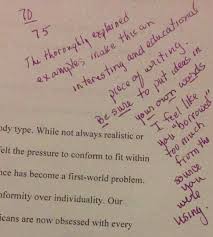
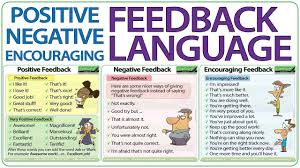
Writing Comments on Students’ Papers starts by addressing a fundamental problem in the teachers’ approach to students’ essays. It points out that teachers must not only be judges of their students’ writing skills, but also coaches that encourage improvement by their learners. The author cites studies showing that students are not comfortable with harsh feedback on their papers. Instead, they prefer comments that focus on the positive elements as well, leaving room for criticism and encouragement. This preference from students can be confirmed by studies on the brain that suggest that learning depends on the emotional state of the learner, and thus encouragement is shown to be crucial. The author recommends that teachers must remember their purpose when commenting on their students’ essays: their function is not merely to point out mistakes but enhancing their students’ chances of improving.
The text suggests that the point of revisions is not merely to edit a text multiple times, its purpose is to rethink the text. Through the hard work of seeing the same text multiple times, experienced writers are able to compose their texts. While allowing many revisions, teachers must be sure that the composition process will stimulate their learners. The text claims that a good strategy is commenting on late-stage drafts, since the students would have experienced the benefits of peer review. Another strategy discussed is allowing rewrites even after the “finished” paper has been submitted. By allowing rewrites, teachers can be more rigorous in their grading, since students will have the opportunity of improving their papers. This strategy can reshape teachers’ orientation, as the drafts become elements to discuss instead of just correct.
While the teacher responds to the student’s drafts, she or he must address only a limited amount of questions. The teacher can begin by encouraging improvement on higher-order issues, such as the overall clarity of the text, only focusing on lower-order issues, such as spelling, when the student successfully handles the structural ones. The text, therefore, argues that the teacher must tell the student that he or she is on the wrong track if their draft does not follow the assignment, which is a higher-order issue. Rather than grading this draft, the teacher could just recommend that the student reread the assignment instructions carefully. Another higher-order issue is the thesis of the paper. Some papers hide their thesis until their end, leaving the reader unable to tell what are the writer’s main points, which suggests that the writer followed his or her way of discussing their ideas without much consideration to the reader. Instead, a reader-based approach will introduce the problems to be discussed, clearly stating the thesis, briefly presenting the whole argument of the essay.
Once the thesis and arguments are adequately exposed, the paper must be discussed when it comes to the supporting ideas and evidence that its author employs. Attention to the complexity of the ideas presented is also important, as well as finding whether the writer left room for opposing views. When the essay finally presents complexity in its ideas, showing a dialogue between evidence and arguments, it also needs to be well organized. This means thinking about main elements of the text, such as the title and paragraphs. The text presents some questions to be asked: is it easy to point the purpose of each paragraph and whether they are coherent? The key point is that each section of the paper has a important function: even a good title can facilitate comprehension, as it can show the reader the writer’s purpose. The same applies to a good introduction. The paper must orient the reader. Therefore, teachers must comment on titles and introductions, as this strategy can show them the importance of these sections to the overall clarification of the essay.
Topic sentences are also important tools to orient the reader. The sentence that starts a new paragraph must expose the writer’s specific view. They are crucial elements, which often makes necessary to change a whole paragraph once they are modified. Paragraphs also need to employ transition words, such as “therefore” and “on the other hand,” in order to connect or contrast different points. Information, another higher-order issue, must be presented carefully. Old information must be addressed in the beginning of the sentence, whereas new information is presented later. This mechanism also orients the reader, since it connects new ideas to the ones already read in the same text. The author calls this method the old/new contract, a strategy that helps the reader to make sense of new information by relating it to what they already know. Therefore, the thesis usually comes at the end of the introduction, because the thesis presents new information, whereas the rest of the introduction focuses on old information.
Once those higher-order issues are adequately addressed, the lower-order issues must be verified. Calling them lower-order concerns does not mean that they are not relevant to the reader. Errors concerning grammar and spelling can be difficult to revise, and the author claims that it is a good strategy to instruct students to be responsible for correcting those types of errors, which saves the teacher from becoming a proofreader. Finally, the text points to the necessity of end comments to encourage revision instead of justifying a grade. In the author’s own words, the mission is to move the draft toward excellence.
Rhetoric and Composition
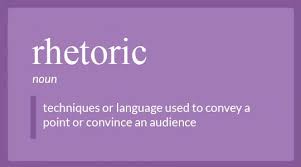
Janice M. Lauer looks into rhetoric and composition as ideal types of writing that could influence writers in developing content for the workplace, civic and cross-cultural. A learner experiences different levels of English studies from language arts curricula in primary and middle grades to advanced composition at the college level. Few students major in English studies due to its perception of being a basic subject, but Lauer points out that it goes beyond learning literature to developing an ideal discipline for rhetoric and composition. The reading focuses on rhetoric and composition writing, whereby Lauer looks at their relationship and disciplinary status. When one has a broad perspective on rhetoric and composition, it becomes easier for them to decipher past rhetorical texts such as Aristotle’s Rhetoric, Quintilian’s Institutio Oratoria and Cicero’s De Oratore. Ideally, Lauer takes the reader through the importance of rhetoric and composition as an ideal type of writing for skilled writers.
From the reading, one has a broad perspective of rhetoric and composition with its influence of written English. One learns and understands the value of ideal types of writing especially towards the composition of texts. Moreover, the skill proves to be ideal for people that seek to analyze the writing process. As per Lauer’s depiction of rhetoric and composition, English stands out as an art that one could major in and develop a keen eye on writing processes. Lauer highlights the need to nature and emphasize different writing pedagogies for it to evolve with time (112). The process fluctuates, rises and declines with different scholars, who seek to recycle principles developed for writing pedagogies. Contributions to its advancement saw rhetoric and composition develop scholars’ approach to critique previous work and challenge underlying arguments and claims. Therefore, the need to restore rhetoric and composition in literature remains a fundamental part of its evolution and influence on written English.
The reading opened my perspective on the discipline with the main focus being rhetoric and composition. Understanding the vital structures of English seem ideal in developing one’s literature and poses a major boost in one’s eloquence in written English. As an intermediate learner, the skills discovered from the work allows one to branch out further by integrating ideal types of writing, which will enrich one’s content. Furthermore, it offers one the chance to explore the subject by understanding previous examples of rhetoric and composition principles and how one can integrate it into their studies. Building upon the current skills in literature, one can explore different features of writing to enrich one’s content. One question that arises is how can scholars package the information as per different academic levels to help young people to develop the skills throughout their academic lives. It makes the teaching process easier as students will be conversant with the subject.

The Problem of Othering
Stephen Menendian and John A. Powell look into the overwhelming challenges and conflict across the globe as a result of othering. Othering refers to the practice where a person or group characterize negative sentiments on another person or group and set them apart as a representation of what is different from them. Racism is a good example of othering, whereby one’s complexion or race affects their status in society. Menendian and Powell explore effects of othering in the society by providing examples such as the ethnic conflict between Muslim and Burmese Buddhist in 2012 (par 7). The authors identify othering as a trait passed on from one generation to another with little or no basis of conflict. It stems from personal rage or sentiments on another’s race or religion and the need to be even or better than the other. In the article, Menendian and Powell focus on group-based othering as it represents various vices that affect a large group or society.
The article’s main focus on group-based othering allows the reader to explore different perceptions of society’s norms. Menendian and Powell give an example of American politics, whereby President Donald Trump used resentment, stoking anxiety and fear of the other as his electoral strategy. The group-based othering encompassed Trump’s racist and nativist nature for the better good of the nation (Powell and Menendian par 14). The article terms the practice as demagoguery and it can be a catalyst for future conflict within the society or nation. The authors believe demagoguery stems from unconscious bias, where one inclines to ideas that please them without considering its negative effects. Ideally, how one perceives a particular race or religion will always affect their judgement on them. Based on the analogy, despised outgroups refer to social groups with low competence and warm in society. Social groups with high competence and low warmth are envied outgroup and remain dominant over the other outgroups.
The article opens one’s mind to the effect of othering in society and how people fail to understand society’s norms or privileges. As a learner, understanding the vices of group-based othering allows one to align themselves with the norm. However, there is room for one to provide their sentiments through freedom of speech, which allows one to be independent. The article details the vices associated with othering and how American society continues to stand behind their common practices. Change in the society and government will require intervention from various bodies that will uproot the evil vices and set the stage for a better future. One thing that stands out from the article is the need for one to understand their surroundings and focus on issues that affect people in different capacities.
Works Cited
Lauer, Janice M. “Rhetoric and Composition.” McComiskey, Bruce. English Studies: An Introduction to The Discipline(s). Urbana: National Council of Teachers of English, 2006. 106-152.
Powell, John A and Stephen Menendian. The Problem of Othering: Towards Inclusiveness and Belonging. July 2016. Accessed on 26 September 2020, <www.otheringandbelonging.org/the-problem-of-othering>.
Greetings to all that have found their way to my blog for the week. In this weeks blog, I will begin by telling you a little more about myself. Then I will explain a little bit about why I selected the M.A. program and will finish this blog by telling you a bit more about why I write.
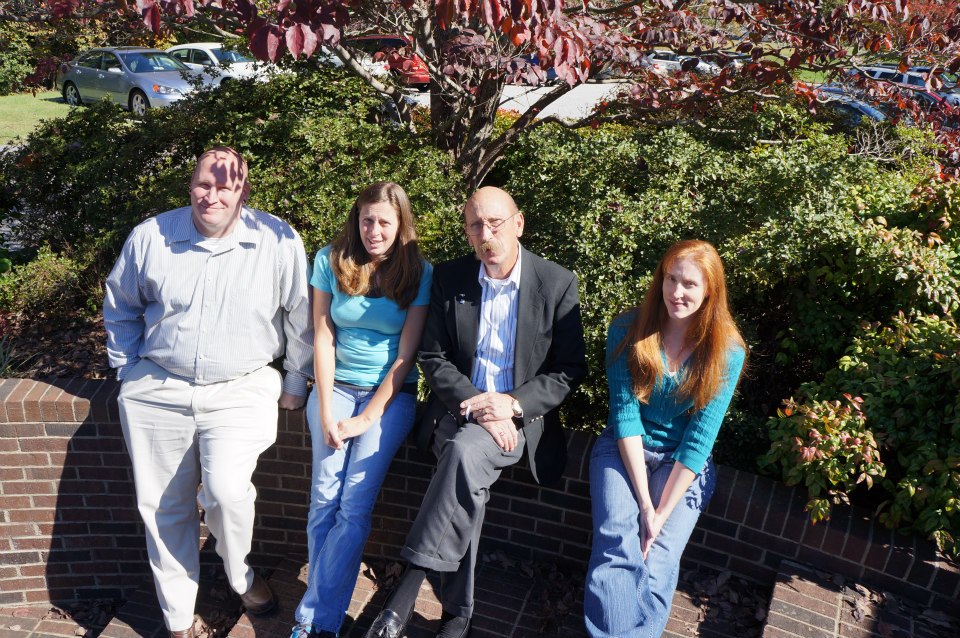
The picture above is of my father and two older siblings. I am from North Carolina originally and that is where my family resides to this day. I miss seeing my family frequently, but at the same time, I’m glad we are so far apart. My siblings and I have totally different lifestyles. That is what happens when you grow up and become independent from such an early age.
Both my mother and father were alcoholics while we were growing up. I would often find myself having to make my own meals. Living in the country, surrounded by farms, there was always plenty of food around. So I am thankful for one of the many things my father taught me in life, how to fish. My father and I would fish in the evenings, go home and clean our catch while my mother would cook the fish. After seeing how to do all of this, I caught on and was doing it all myself by the age of eight.
When my parents found sobriety, I was twelve years old. My parents loved each other, but could no longer live together. It was alcohol that kept them together for so long. So I was given the choice of which parent I wanted to live with. My two sisters were daddies girls, literally got anything they wanted from him. While I was a mommas boy. I could go on and on with this whole story, but this isn’t the time or place.
In February of 2000, I enlisted in the United States Navy. It was a great honor to serve our country in a time where our nation stood strong and unified, for the most part. When I was eighteen, I loved seeing the commercials, “Join the Navy and see the world!” Some of the places my travels took me to was; Spain, Portugal, Germany, Scotland, Great Britain, Bahrain, Dubai, Qatar, Iraq, Kuwait, and many other places within the United States. Spain was definitely my favorite. The culture their stands next to none. I was even fortunate enough to witness the running of the bulls in 2002. In 2012, I was injured and it put an end to my career in the Navy. I guess it was a blessing in disguise. More than half of my unit didn’t make it home alive from that deployment.
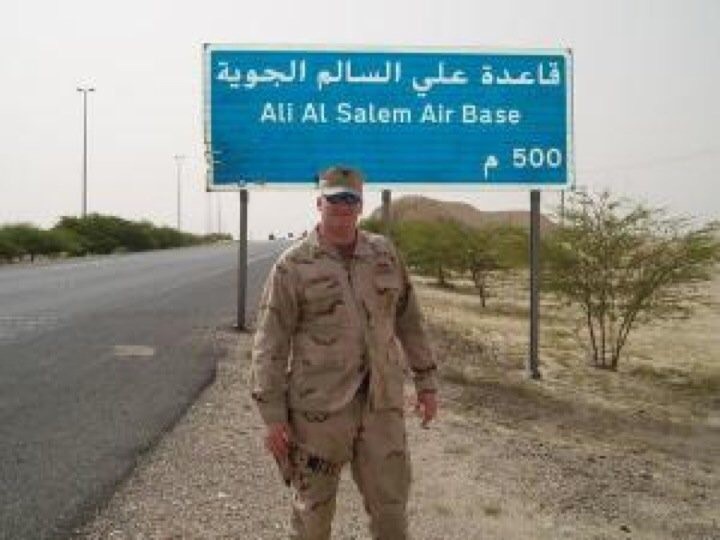
Currently I work at Brookdale Community College on a part time basis. In order to obtain a full time faculty position, a masters degree is required. Since I completed my B.A. at Kean in English studies, It only made sense to stay at Kean for the M.A.. The transition from one degree to the next was seamless.
When we were asked last week to free write, the question made me really think. Why do I write? There are so many reasons that came to mind, but the main recurring thought was that writing allows me to express emotions in ways that I may not be able to otherwise. Writing allows me to log events that have happened in my past, and lets me think more deeply about those events and why I go through the trouble of logging it. In some ways, it gives me clarity in times of uncertainty. Writing has helped me with healing. Healing my mind of the hell that replays on a daily basis. Putting the pieces together one at a time.

Well I hope that you each know a little more about me than you did before this post. I’m looking forward to our next couple of months together.
Have a WordPress.com account? Log in now.

